Share This

Showing posts with label Plant Disease. Show all posts

Wednesday, 12 February 2014

Managing False Smut Disease in Rice

Managing False Smut Disease in Rice


Also known as Lakshmi disease, it is caused by a fungus and was believed to be an indication of a bumper crop in the year.

False smut infestation in rice has been reported from many places in the State in an alarming proportion. In Cauvery delta zone, the disease has been reported to an extent of 10-20 per cent during kharif and rabi seasons.

Another name


Also known as Lakshmi disease, it is caused by a fungus and was believed to be an indication of a bumper crop in the year.

Due to the infection, individual grains of the panicle get transformed into greenish spore balls of velvety appearance. Spore balls are small at first growing gradually to reach one cm or more in diameter.

They are slightly flattened, smooth, yellow and are covered by a membrane. The membrane bursts as the result of further growth and the colour of the ball turns orange and later yellowish-green or black.

Under congenial conditions like high moisture or rainfall accompanied by cloudy days during the period between flowering and maturity of grains, the development of false smut is rapid and causes considerable loss.

Yield loss is not only due to the occurrence of the smut balls but also due to increased sterility of kernels adjacent to the smut balls.

The disease not only reduces the yield but also affects the quality of grains or seeds. Prominent high yielding rice varieties like CO 43, CR 1009, ADT 38, ADT 39 and BPT 5204 are found susceptible to this infestation.

Late planting of rice during kharif and rabi seasons,are more susceptible to this problem.

Management


— Healthy disease free seeds alone should be used for sowing.

— Seeds should not be taken from false smut affected fields.

— At the time of harvesting, infected plants should be removed and destroyed

— Field bunds and irrigation channels should be kept clean.

— Excess application of nitrogenous fertilizer should be avoided.

— Regular monitoring is very essential. Spraying of copper hydroxide at 2.5 gm per litre of water or propiconazole at 1.0 ml per litre will be more useful.

(Dr .K.Karunanithi is professor, Plant Pathology and Dr.R.Rajendran, Director in charge, Tamil Nadu Rice Research Institute, Aduthurai – 612 01, email: dirtrri@tnau.ac.in, Thanjavur, Tamil Nadu.)

The Hindu 

Tuesday, 5 November 2013

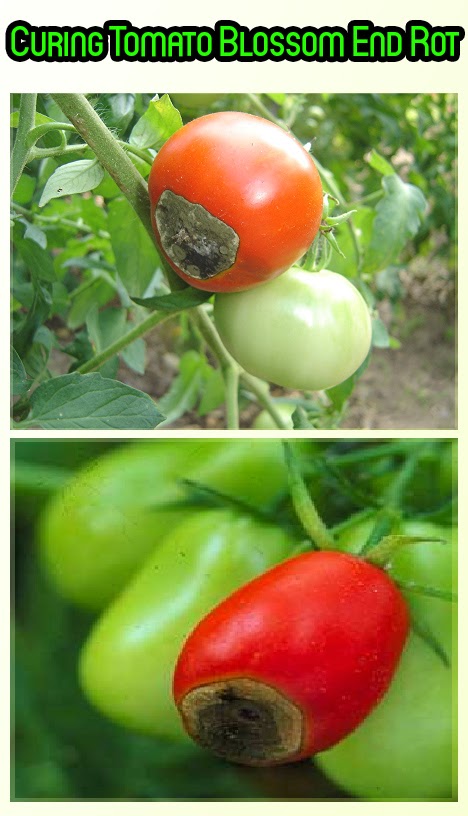
Curing Tomato Blossom End Rot

Curing Tomato Blossom End Rot


If you are gardening tomatoes at your home garden you may have encounter the particular problem on the blossom end of the fruit. Although this problem also appear in eggplants and peppers too. 

 It is distinguish by a brownish, depressed leather like area with a size varies from dime to dollar coin or may be more. It make the tomato unfit to sell if not consume.

Causes :


The main culprit of the problem is the deficiency of the calcium in soil coupled with the erratic supply / access of water by the plant. However careless pruning of vines and hoeing also contribute to the problem.

Treatment:

  • If you find any fruit affected with the rot, pluck it from stem immediately
  • Keep the soil moist every time especially during hot / dry seasons. You can use pet bottle irrigation for this purpose. 
  • Use mulching technique to capture the moisture in the soil for longer duration.
  • In order to increase the calcium content in the soil one can add grounded egg shells in the soil
  • Stop hoeing and cultivating other plants near the plant.
  • You can use the products below to improve the condition of tomato plants in your garden

Monday, 7 October 2013

Management of rice blast disease


MALLIKARJUN KENGANAL
V. R. JOSHI
Management of rice blast disease

Rice blast is a fungal infestation known to occur in all the rice growing areas of the county. The disease attacks all the parts of the crop growing above the soil. It is broadly classified into three types, leaf, collar and neck blasts.

Initially elliptical or spindle shaped lesions occurs with brown borders and grey canters. Under favorable conditions, lesions enlarge and coalesce eventually killing the leaves. Leaf blast usually increases early in the season and then declines later as leaves become less susceptible.

BLACK COLOR


Collar blast occurs when the pathogen infects the collar that can ultimately kill the entire leaf blade. The pathogen also infects the node of the stem known as node blast that turns blackish and breaks easily.

Neck blast occurs when the pathogen infects the neck of the panicle. The infected neck is girdled by a greyish brown lesion and the panicle falls over if the infection is severe. If neck blast occurs before the milk stage (rice forming stage), the entire panicle may die prematurely, leaving it white and completely unfilled.

Later infections may cause incomplete grain filling and poor milling quality.

Varietal resistant to blast is the most practical and economical approach for management. The most common resistant varieties are Aditya, CSR27, IR64, KRH2, Krishna, Hamsa, Naina, Pusa sugandha3, Rasi, Vasumati, PA6129, DRRH2, Dhan80, PR113, Swati, Narendra, Sumati, Swarnadhan, Triguna, Tulasi, IR-36 etc.

DISEASE RESISTANT


Use disease free seeds. Apply recommended dosage of nitrogen application in 3 to 4 splits and avoid final application in infested plots.

Burn previous crop residues if the crop is found infested. Early sowing helps prevent this infestation spread from neighbouring fields. Avoid water stagnation.

Treat seeds with Pseudomonas fluorescence 10g/lit of water for 30 min, dip the seedlings in Pseudomonas fluorescence 5gm/lit for 20 minutes before transplanting. Foliar spray of the Pseudomonas fluorescence 5gm/lit can be done at an interval of 15-20 days after transplanting.

(Mallikarjun Kenganal & V. R. Joshi, Assistant Professors, Plant Pathology, Agricultural Extension Education Centre, Koppal, Karnataka: 583 231, Ph: 09845364708, email: mallikarjun_nss@rediffmail. com)

Saturday, 7 September 2013

Managing nematode infestation in banana


E. I. JONATHAN/N. SREENIVASAN
The Hindu
Managing nematode infestation in banana

Nematode infestation is one of the major limiting factors in banana production. Burrowing nematode, root-lesion nematode, spiral nematode and root-knot nematode are the major nematodes associated with banana.

These cause extensive root and corm damage leading to 20-50 per cent fruit yield loss. Commercial banana cultivars like Nendran, Robusta, Grand Naine, Ney Poovan, Poovan and Rasthali are often infested by these nematodes.

Dark lesions


The nematodes penetrate the roots and destroy the plant cells. This leads to dark lesion on root surface. Under severe infestation the root turns black. These nematodes can migrate from infected roots to other parts of the plant.

Adult females lay 200-300 eggs. They damage the xylem vessel and affect the uptake of water and nutrients.

Research on nematode management in banana is in progress for more than three decades through All India Co-ordinated Project on Tropical Fruits (AICRP-TF) at the Tamil Nadu Agricultural University (TNAU), Coimbatore. The following are some management options that help to overcome the infestation.

Summer ploughing and exposing the soil to sunlight prior to planting for about two months. Selection of healthy sucker from nematode-free plants.

Grow marigold


Growing Sunhemp or marigold in and around the basin of plants during early stages of crop and incorporating their biomass one month later can reduce nematode build up.

Press mud application at rate of 15 tonnes per ha (5 kg/pit) or neem cake 1.5 tonnes per ha (500 g/pit) during planting can also help to avoid nematode build up.

Application of farm-yard manure at 10 kg per plant 60 days after planting. — Rotating banana with paddy.

Application of Pseudomonas fluorescens liquid formulation at 4 lit/ha at two, four and six months after planting through drip system will help.

(E.I. Jonathan, Prof and Head, Department of Fruit Crops and N. Sreenivasan, Assistant Prof, department of Nematology, TNAU. email: seeni_nema@yahoo.com and eijonathan@yahoo.com, phone: 09865724277.)

ShareThis